
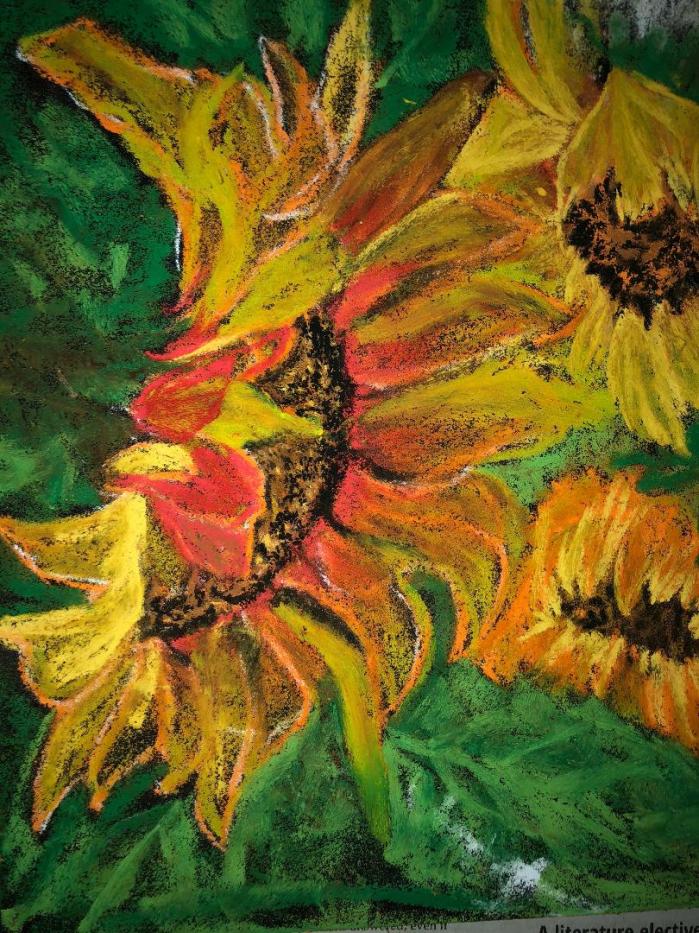
Oil pastel on sandpaper; 27 cm x 22.5 cm
Blog Post 82

Oil pastel on sandpaper; 27 cm x 22.5 cm
Blog Post 82
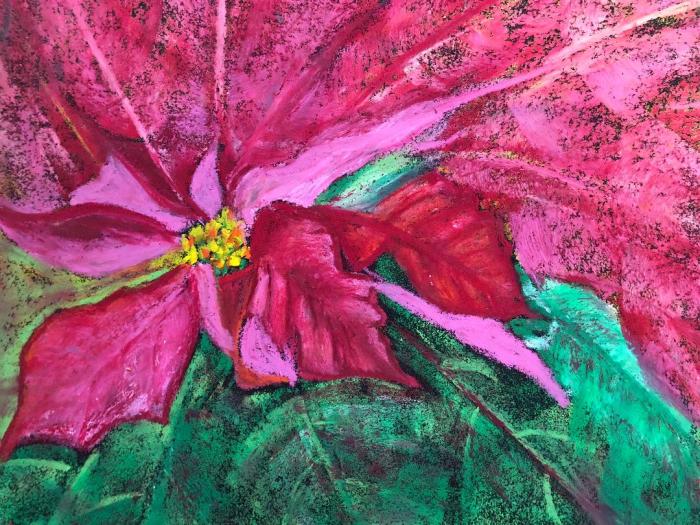
Oil pastel on sandpaper; 27 cm x 22.5 cm
Blog Post 81

Acrylic on canvas board; 53 cm x 53 cm
Blog Post 80

Acrylic on canvas; 54 cm x 44 cm
Blog Post 79
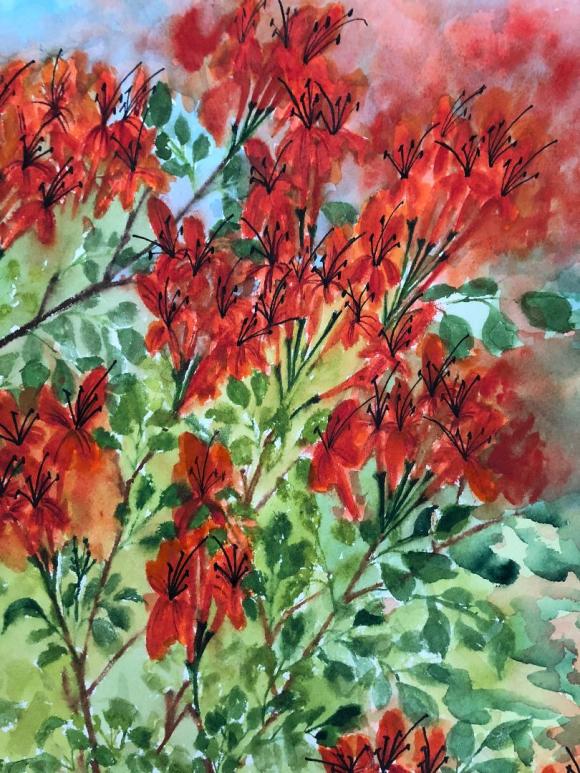
Watercolor on cold pressed 140 lb-Arches Aquarelle paper; 51 cm x 36 cm
Blog Post 78
Note: I did paintings in Blog Posts 78-86 from October to December, 2018.

Acrylic on canvas; 60 cm x 81 cm
Blog Post 77
Who does not eat watermelons , especially during the summer season? That’s why this is a favorite painting to hang by the dinning table. To paint one for my family, I bought a big watermelon, cut it up, and took several photos showing several cuts arranged from all angles. This is the first in my coming series of watermelons.
This was the procedure I followed for this big painting:painting a background; sketching the photo on canvas, enlarged, using grids; painting 2-4 layers of the flesh and the skin; painting the finishing touches (shadows to separate the slices); using the palette knife to give texture to the flesh;; and lastly, painting the seeds.
I worked on this watermelon painting for 3 days, painting 2-4 layers of paint on the watermelon flesh, skin, and seeds. I used Winsor and Newton (Galeria) acrylic paints in tubes (creamy consistency). For the skin, I used the following colors: phthalo green, phthalo green + yellow; phthalo green +Winsor blue, and titanium white. For the flesh I used the flooring colors: crimson and crimson + red hue. And for the seeds, I used the following colors: Mars black + Winsor blue and titanium white.
Notice that I did not paint shadows. I just separated the slices from each other through differences in color shades,–that is, cast shadows on each other, not on the environment. So, the effect seems like floating slices of watermelon.
Here are some more painting tips:
For the skin:
For the flesh:
For the seeds
This still life subject is easy to paint. Try it, at least once.
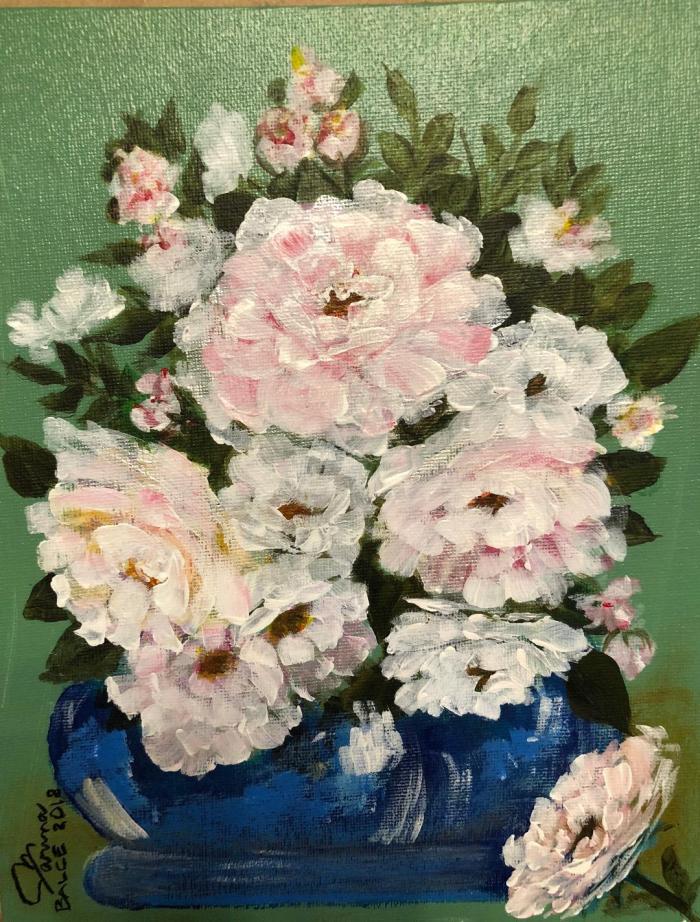
Acrylic on canvas board; 25 cm x 20 cm
Blog Post 76
This was how my Mom arranged roses on a vase–plopped any which way. Later on, as I was reviewing how the master artists like Vincent Van Gogh painted cut flowers in vases, I saw that they also painted them in ‘not-so-arranged’ ways. Their flowers in vases seemed just placed into vases, without any regard for the rules of basic flower arrangement practiced in the western and eastern ways.
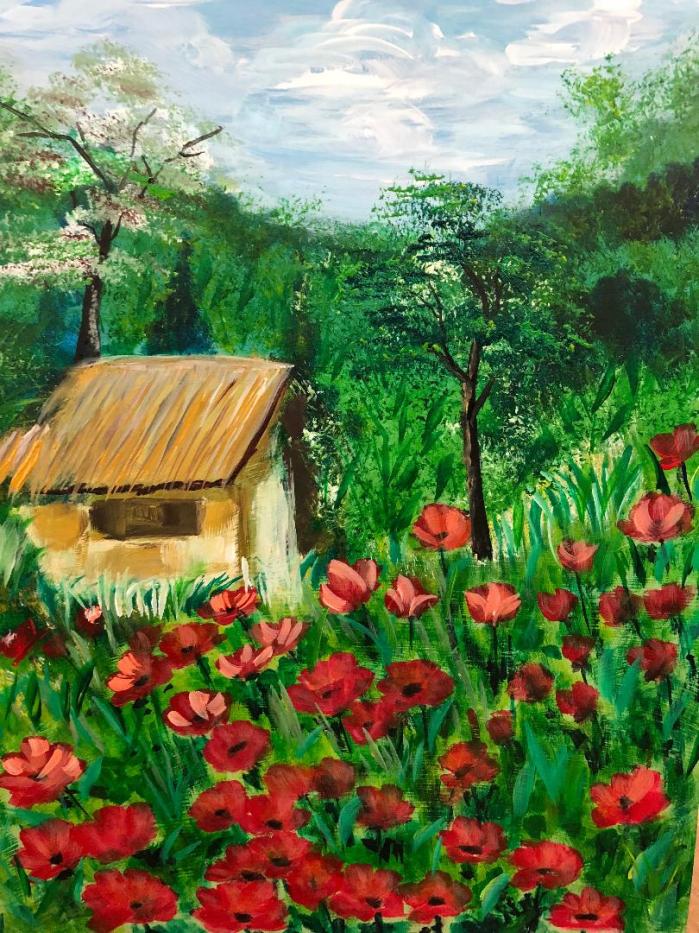
Acrylic on canvas board; 50.5 cm x 38 cm
Blog Post 75
This is a poppy farm commonly seen in Italy.
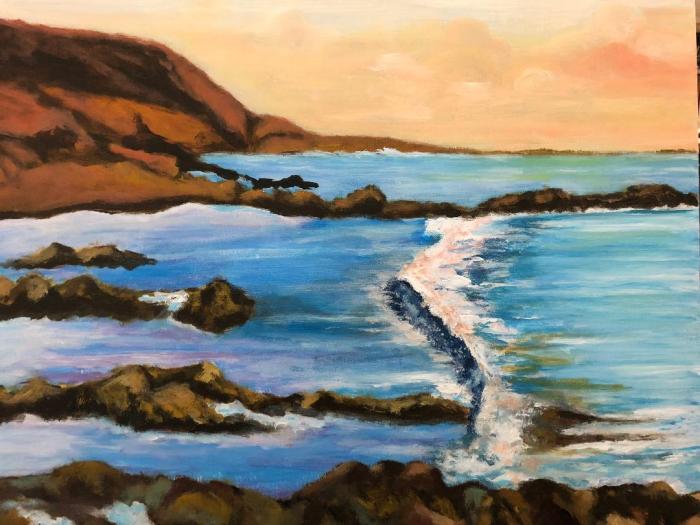
Acrylic on canvas; 55 cm x 44.5 cm
Blog Post 74
This is the third in my series of seascapes.
 paintingsofmarinabalce.me